
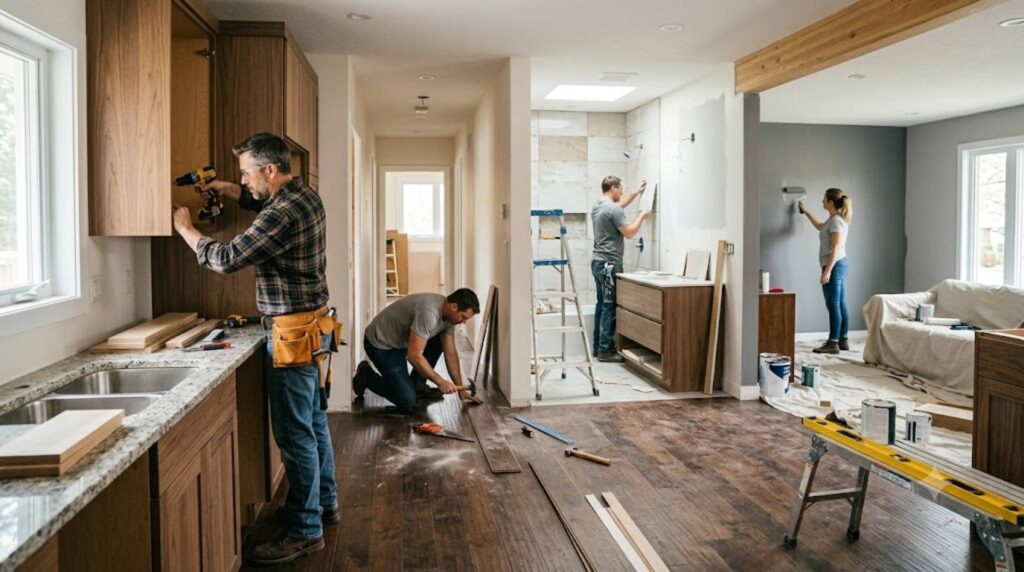

Home improvements can make a noticeable difference to comfort, appearance and even the value of a property. But before choosing new flooring or planning a larger renovation, it helps to understand what the work could cost.
There is no single price for a home improvement project. The final figure depends on the size of the property, materials, labour, location and how much work is involved. In the UK, current 2026 cost guides show particularly wide price ranges between basic upgrades and higher-specification projects.
What Affects Home Improvement Costs?
The first thing to consider is the scope of the project. Replacing kitchen doors is very different from removing the entire kitchen and changing its layout.
Other factors can include the condition of the property, accessibility, structural work, waste removal and professional fees. Your location can also have a significant effect. For example, recent UK cost data indicates that London and the South East can be considerably more expensive than many other regions.
It is also sensible to keep a contingency fund. A 10–15% allowance can help cover unexpected work once walls, floors or old fittings are removed.
How Much Does a New Kitchen Cost?
A new kitchen can be one of the most noticeable improvements you make, but costs vary greatly depending on the design and specification.
A basic kitchen renovation may start at around £5,000, while a mid-range replacement can be around £12,000. Higher-specification kitchens can reach £25,000 or more.
Keeping plumbing and electrical points in their existing positions can help control costs. Moving appliances, removing walls or changing the layout will usually increase the budget.
How Much Does a Bathroom Renovation Cost?
A straightforward bathroom renovation may cost around £3,000, while a mid-range project can be approximately £7,500. Premium bathrooms can reach £15,000 or more, depending on fittings and finishes.
The condition of the room also matters. If plumbing needs replacing or the walls and flooring require substantial preparation, the final price can rise quickly.
What Does a Loft Conversion Cost?
A loft conversion is a larger investment because it involves structural work as well as internal finishing.
Current UK estimates put a typical loft conversion at roughly £20,000–£65,000, depending on the type and specification.
A simple conversion may cost considerably less than a dormer conversion with additional structural changes, windows and a new staircase. Planning, building regulations and professional design work should also be considered before setting your final budget.
How Much Does a House Extension Cost?
Extensions are among the more expensive home improvement projects because they involve foundations, structural work, roofing and external finishes.
A typical single-storey extension can range from around £25,000 to £100,000, depending on size and specification.
For a 20m² single-storey rear extension, another 2026 cost guide gives a mid-range figure of about £62,500, with a typical range of £42,000–£95,000 before VAT and some professional costs.
If the extension includes a new kitchen, remember that the kitchen itself can represent a substantial additional part of the budget.
What About New Windows?
Replacing windows can improve insulation, appearance and comfort. For a typical three-bedroom property, current renovation estimates put a full window replacement at roughly £2,500–£8,000, with an average around £5,250 in one 2026 cost guide.
The number of windows, frame material, glazing specification and property size will all affect the final price.
How Much Does a New Roof Cost?
Roof replacement is another project where the condition of the existing structure matters.
For a typical three-bedroom property, a complete new roof is estimated at around £6,500–£18,000 in current UK renovation cost data.
A quote should make clear whether it includes scaffolding, removal of the old roof, insulation, timber repairs, tiles and waste disposal. Otherwise, a seemingly affordable quote can become more expensive later.
How Can You Keep Home Improvement Costs Under Control?
Start by deciding what matters most. It is easy for a project to become more expensive once you begin adding upgrades.
Get several detailed quotations rather than comparing headline prices alone. Check exactly what each quote includes, including labour, materials, waste removal and preparation work.
It can also help to keep the existing layout where possible. Moving kitchens, bathrooms, doors and electrical points often adds labour and material costs.
Most importantly, avoid choosing a contractor purely because they provide the cheapest quote. A clear quotation, relevant experience, insurance and good references can be more valuable than saving a small amount at the beginning.
Frequently Asked Questions
What is the cheapest home improvement project?
Painting, decorating, replacing flooring and updating small fixtures are generally less expensive than structural projects. A cosmetic house refresh can cost considerably less than a full renovation.
Which home improvement adds the most value?
There is no universal answer because value depends on the property and local market. Improving a tired kitchen or bathroom, creating useful living space and addressing essential maintenance can all make a home more appealing.
Should I renovate one room at a time?
For many homeowners, completing projects in stages makes budgeting easier. It also allows you to spread disruption and costs over a longer period.
How much extra should I budget for unexpected costs?
A contingency of around 10–15% is a sensible starting point for many renovation projects. Older properties or projects involving structural work may require more flexibility.
Why do home improvement quotes vary so much?
Quotes can differ because contractors may use different materials, labour rates and levels of finish. The scope of work may also vary. Always compare itemised quotations to make sure you are comparing like for like.
Conclusion
Home improvement costs can vary from a few thousand pounds for smaller upgrades to well over £100,000 for major renovations. The key is to understand what your project actually involves before setting a budget.
Get detailed quotations, allow money for unexpected work and think carefully about where higher-quality materials will make a genuine difference. With realistic planning, you can improve your home without letting the project budget get out of control.